Practice Runs
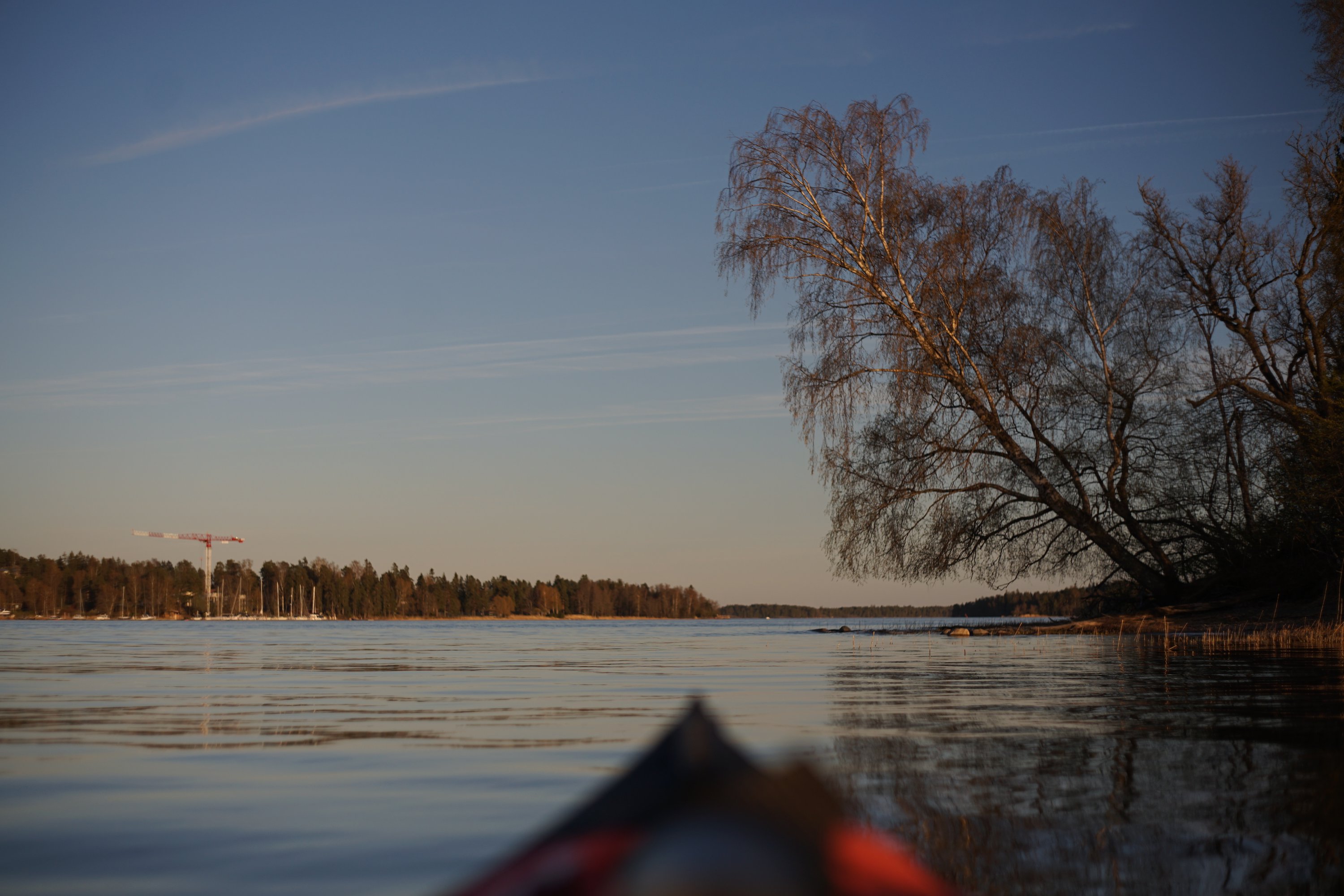
The book Maamme kirja tells the story of a man who paddles the Kymijoki waterway all the way from Muurasjärvi down to the sea. I decided to try the same thing with an inflatable kayak.
I had been buying gear throughout the winter, and last weekend I finally got to test it. Most of the equipment worked as expected, but the plans shifted somewhat.
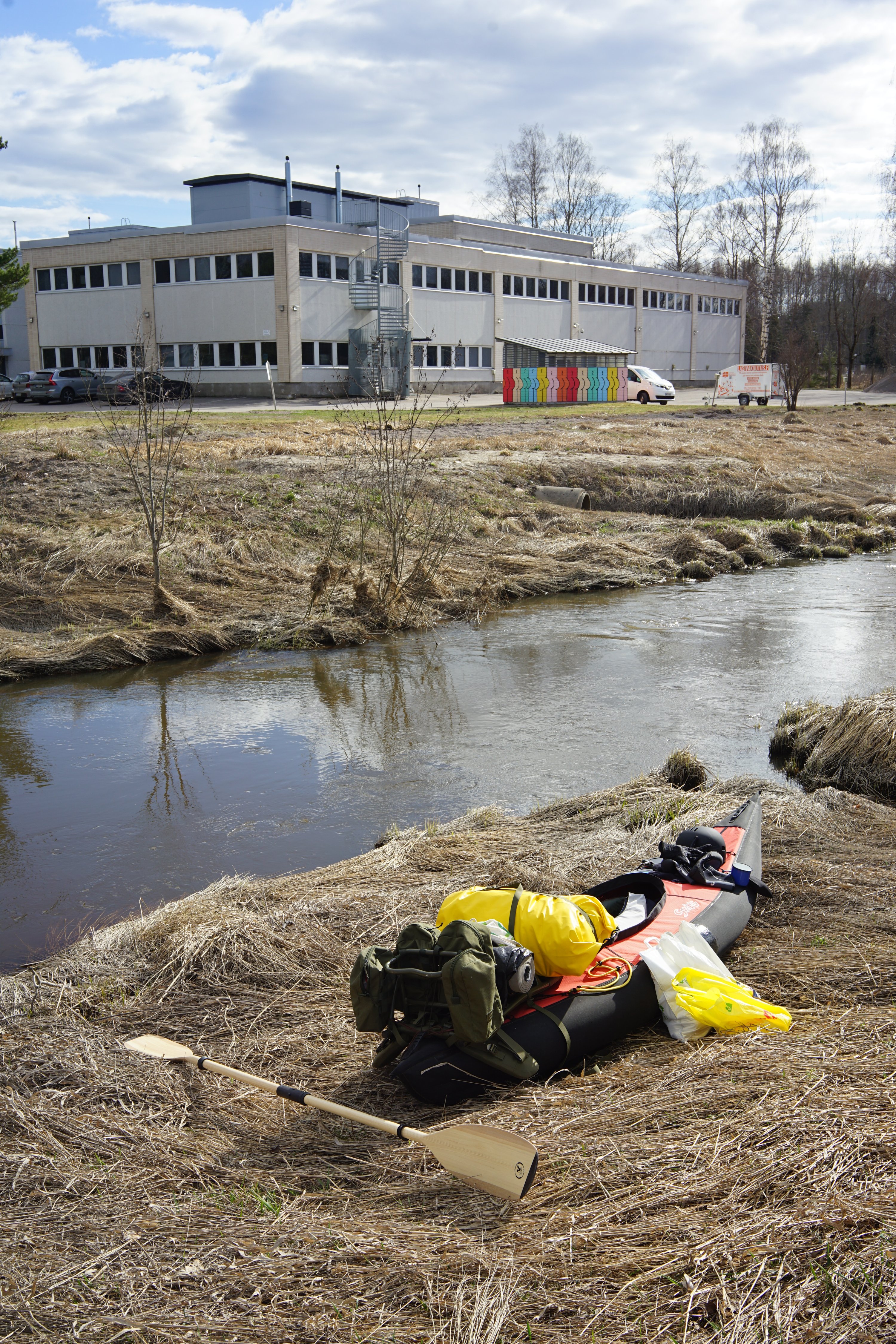
The original idea was that I could portage the kayak if needed. Unfortunately the load turned out to be so heavy that carrying it isn't really feasible.
With portaging ruled out, paddling is the only way forward. Given that I haven't paddled long distances before, continuous slogging could become a challenge. I haven't paddled shorter distances much either, and there isn't much time to train before summer.
Last weekend I paddled about six kilometres into a headwind without breaks, and my left hand stopped working. My average speed was 2.6 km/h and over 48 hours I covered about 20 km. I think it's better to think of this trip as a camping holiday rather than an endurance event.
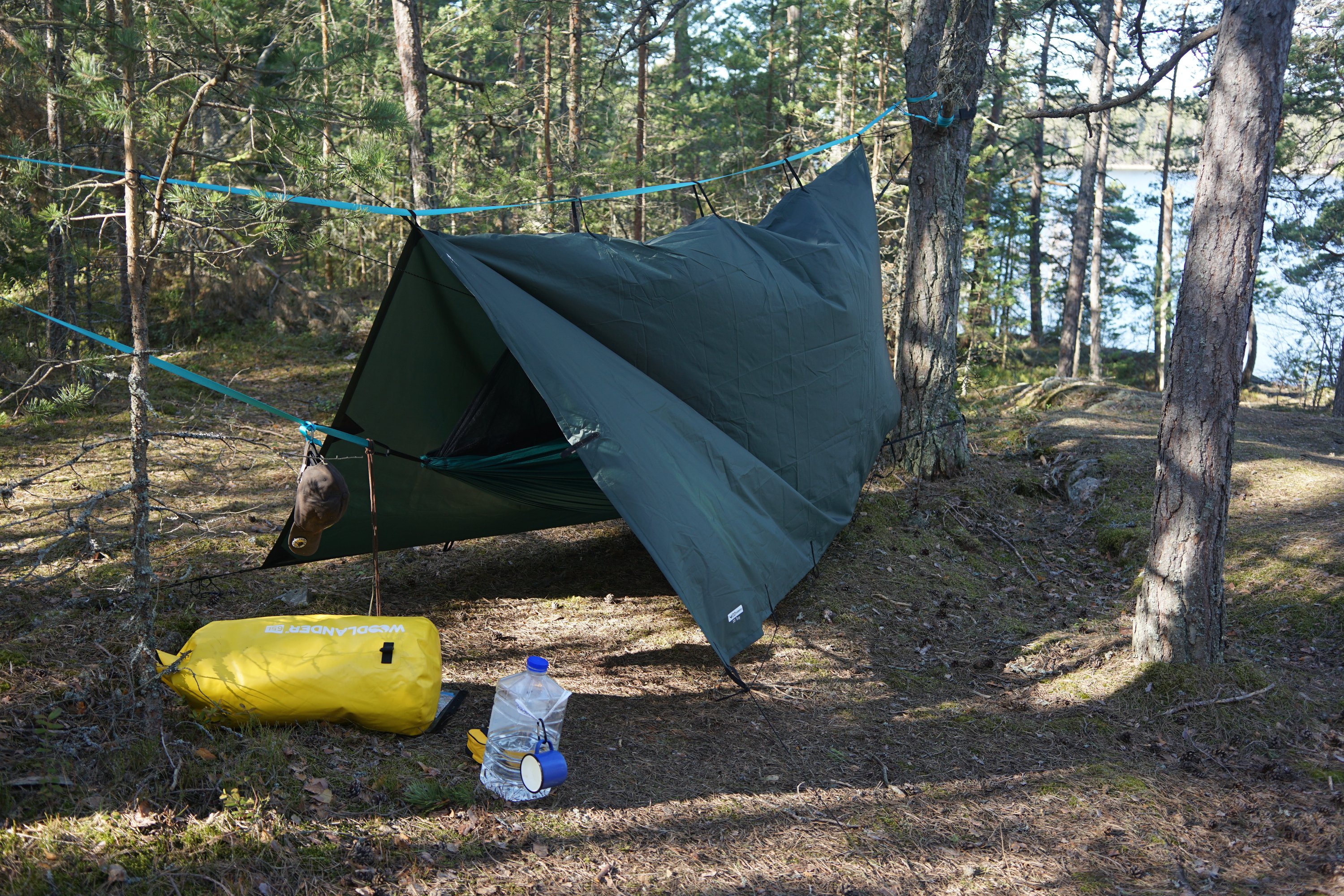
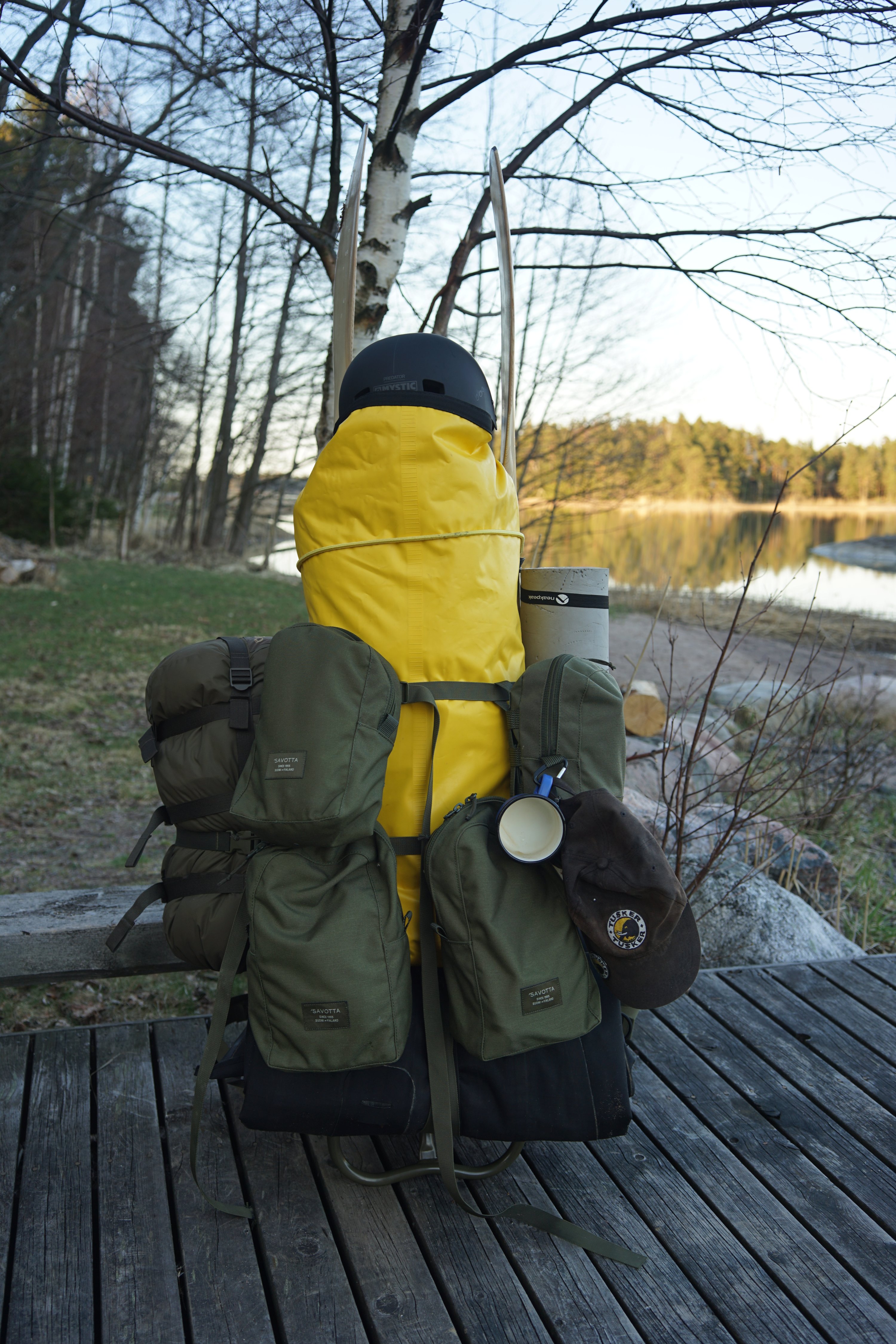
Yesterday I meant to go paddling but started coughing while packing, so I decided to take it easy. I did pack anyway and tried to reduce weight. The problem is that the kayak alone weighs about 11 kg, the old sleeping bag probably a couple of kilos, the hammock and tarp a couple more, the cooking gear a couple more — and then 10 litres of water and a few kilos of food on top.
Paddling with the load is fine, but having to carry it all dampens the motivation to go out and train. Well, now it's packed and the sun is shining, so I suppose I should go. I'll take the bus to Suvisaaristo, to the harbour at Suinonsalmi, and see where the wind lets me paddle from there.
By the time I reached Suinonsalmi the wind had picked up — or maybe I just hadn't noticed it back in Kauklahti. I waited several hours to see if it would calm down. Eventually I just had to go, since lugging the massive pack back immediately didn't feel right either.
One lesson from this trip: wind funnels between islands and appears to come from a different direction than it actually does. This creates surprisingly tight shifts. As a result I found myself paddling into a headwind constantly.
Before Stora Herrö the wind was at its worst, kicking up real gusts, and it started raining. At one point it felt like the rain might turn to hail. The last short crossing was a real slog.
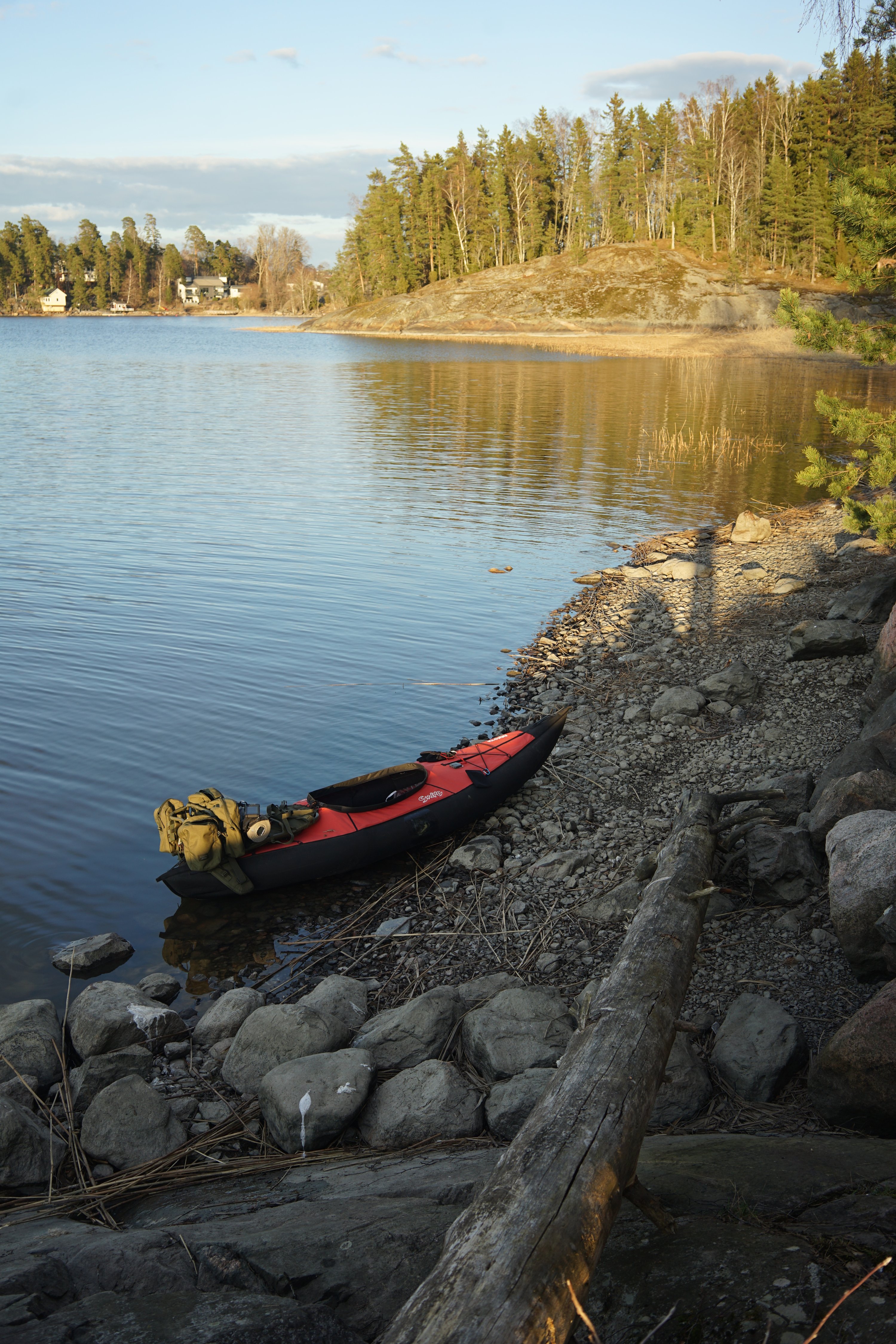
Second lesson: always keep a complete change of clothes in a dry bag. I had put on my spare clothes while waiting for the wind to drop at Suinonlahti. Now some of those spares were wet. I rigged up a quick shelter and tried to dry clothes — they didn't dry by evening. I also gathered firewood and built a fire. I had landed at a great spot, a small beach wedged between two rock faces, with good trees for the hammock and completely sheltered from the wind.
The night was a bit cold and it felt like I hadn't slept, though the clock said I had. Wet clothes were the problem. A space blanket helped. In the morning I was woken by a flock of eider ducks making a racket. The campfire table was frosted over. But the sun was shining, I made several breakfasts and dried clothes.
When the wind started picking up a little I decided to head out. I thought about exploring the islands to the east, but my hands were already tired from the previous day, and going further would mean circumnavigating the whole Suvisaaristo to get back to the start. So I took the most direct route back to Suinonsalmi. The whole return trip was with a strong tailwind.
The pack weight was actually quite manageable now. My feet did get sore and several muscles that don't usually cramp felt on the verge of it. I can't really figure out how to reduce the weight much further.